
New Kai Coordinator for Karekare Draws on Deep Local Roots
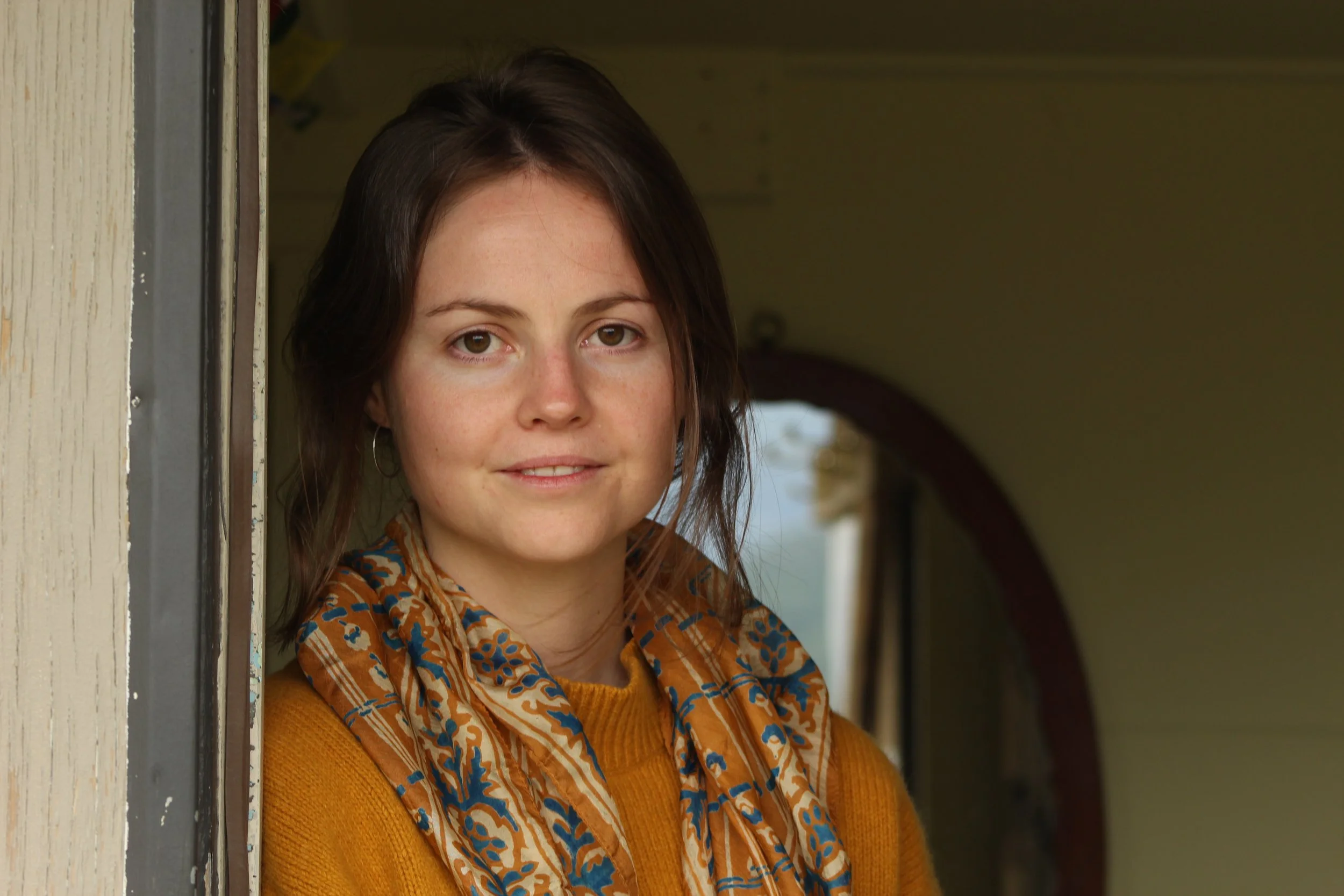
A strong family tradition of growing food, a professional life spent working in gardens and alongside communities, and a deep love of the place she calls home have all come together in a new role for Rose Turbott, Kai West’s local kai coordinator for Karekare.
Rose will be working alongside community members and community groups to help strengthen kai resilience in the Karekare area. She's quick to acknowledge that a lot of this work is already underway, led by groups such as Grow Karekare.
"I'm really looking to support the work that's already happening, and to help create both momentum and longevity," says Rose.
"I see food resilience as equipping people with the skills to source, grow, prepare and cook kai. We've got a big community of growers here, but also a community of fishers, hunters and foragers too. I'm trying to figure out how I can connect and support the community in this space, drawing on the traditions of this area."
The local kai coordination role is part of Kai West’s Kai Resilient Neighbourhoods approach, which is growing across more locations. Building on the Kai Conversations held across nine neighbourhoods in 2025, the approach identified a clear need for locally embedded coordination to support neighbourhoods to turn shared themes, ideas and priorities into action. Over time, each Kai Resilient Neighbourhood will have local kai coordination, creating a network of people who can connect local initiatives, strengthen relationships and support locally led action while contributing to the wider Kai West network.
Rose originally attended the Kai Conversation for Piha and Karekare, and with a strong family history of kai-growing in the neighbourhood, alongside work she was already doing in this space elsewhere, the role felt like a natural fit.
Her grandparents lived on the lower part of Watchmans Road and both had deep connections to the land and the environment. Her grandfather, Harry Turbott, has been described as New Zealand's first landscape architect, with his story told in a book by Garth Falconer. Her grandmother, Nan Manchester, was a talented painter whose work often celebrated kai and community.
"I do know there were many beautiful heritage fruit trees planted where the family home still stands on lower Watchmans Road. Some of these remain today, and my dad looks after the old cherimoya and casimiroa, along with a very cherished feijoa tree that would have been planted in my grandmother's time,” says Rose.
Since then, the family has expanded the garden, now growing avocados, macadamias and bananas alongside a seasonal supply of potatoes, kūmara and other vegetables.
Rose's grandmother also collaborated with Gilian Painter, an Oratia-based writer known for a number of books on herbs and cookery, illustrating Painter's The Fruit Cookbook.
"There are some beautiful abstract frottages of fruit in that book, which are some of my favourites," says Rose. "I often think about how these connections come back around through time, because I now maintain a garden in Oratia, right next to the site of Gilian Painter's old garden and home."


Alongside her work as a gardener, tending orchards and vegetable gardens in Oratia, Rose also works at the New Lynn library and community centre.
"Through that role I help with community programming, and we run a seed library there. I really enjoy that work, and realised I wasn't doing anything like it in my own community. So when this role came up, I saw it as a way to bring those same skills home."
For now, Rose is still talking with the Karekare community to understand what's already underway and how it can be built on further.
"That might mean more workshops, building on the garden visits Grow Karekare are already running. There are other projects we’d like to investigate such as creating seed swap opportunities and setting up Pātaka Kai spaces too. We know a lot of people are already growing food in their own backyards, so it's about finding ways to keep supporting that."
The Kai Conversations helped identify a broader framework for how local coordination can work, pointing to a shared desire for a food system that is locally grown, fairly shared, culturally meaningful and environmentally regenerative.
"This sets a clear pathway. When communities lead, alongside regional coordination, even small local initiatives can ripple out into broader, lasting impact," says Michele Eickstaedt, Kai West's Collaborations Broker.
Over the longer term, a well-established local kai system in Karekare will look like regular neighbourhood kai gatherings, stronger food resilience and access to kai for everyone. It will also mean real intergenerational learning which sees knowledge passed from older growers to younger generations, and space for young people to step into leadership roles with kai initiatives of their own.
“The hope is that we’ll see a genuinely connected network of kai initiatives and organisations working together rather than duplicating each other’s efforts, with local food production increasing and abundance being shared and cellebrated locally,” says Michele.
“Woven through all of this is the idea of resilience where communities are better prepared for economic or climate disruption, local food knowledge is retained and passed on, and there’s a stronger, more connected neighbourhood.”
For Rose, that sense of connection is personal as much as it is professional.
"It's really hard to put my finger on exactly what I love about this place," she says. "I love having my family around me, and the connection to my ancestors here. It's a beautiful natural environment to live in and there's a certain spirituality to it. And it's amazing to be in an area that feels so remote, yet is still connected to what a big city can offer.”
This initiative has been made possible with funding support from the Waitākere Ranges Local Board, helping Kai West get local kai coordination underway in Karekare and supporting the community to build on the work already happening locally. For more information contact michele@kaiwest.org.nz.