
The digger arrived early!
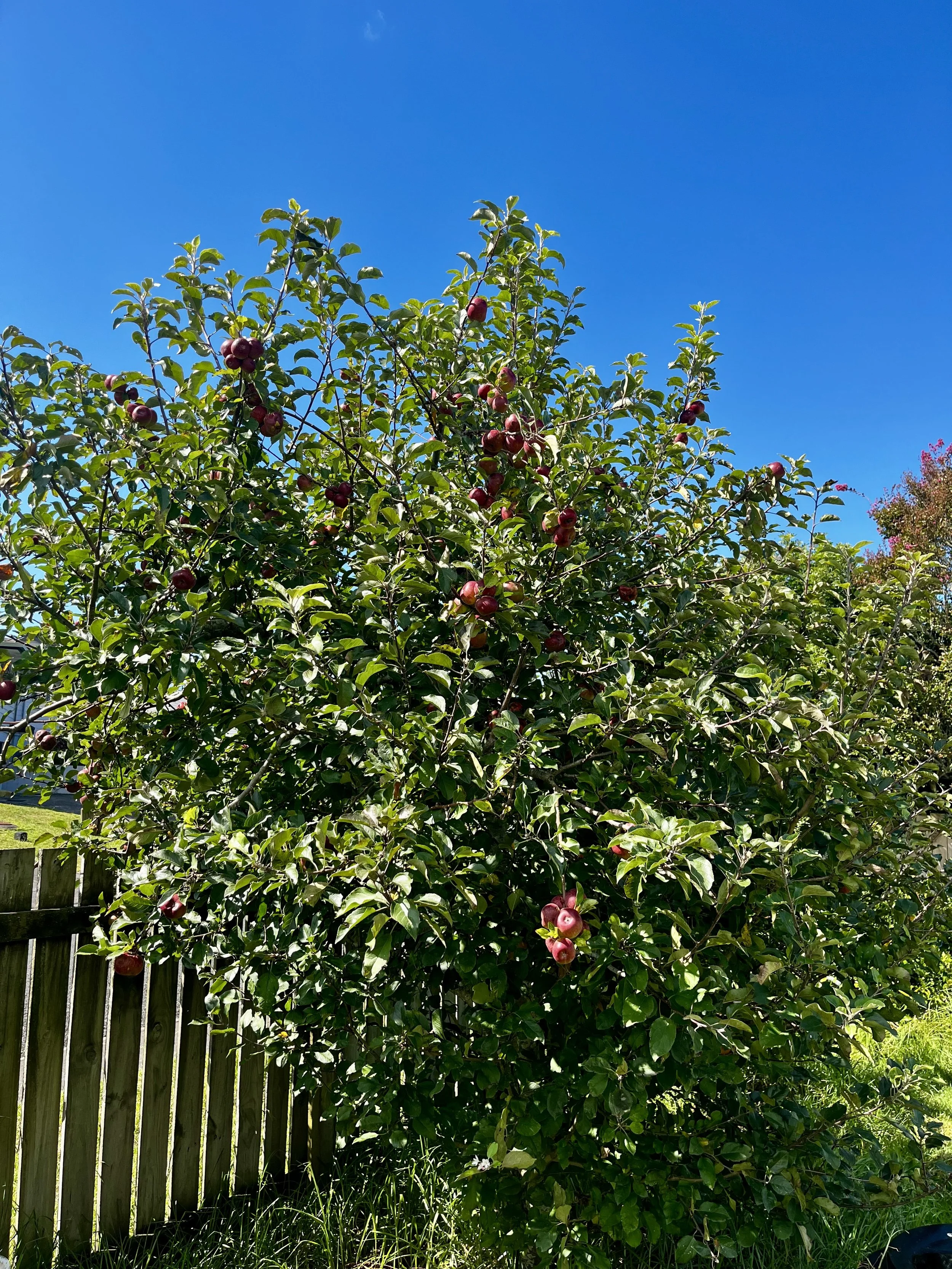
In West Auckland, neighbours are taking action to rescue fruit trees from new housing developments. With the fast bulldozing of older homes on large sections to make way for more intensive multi-unit housing, hundreds of heritage fruit trees are being lost, trees that once fed families, neighbours, and entire streets.
Susie Trinh lives on a street in Henderson where not only old houses were removed for housing intensification but also due to recent floods. Before houses were demolished for redevelopment her elderly neighbours invited her over to salvage their plants.
“ I've successfully rehomed turmeric, blue danube plum, peach seedlings, mulberry tree, tree dahlia and streamside plantings. For the category 3 homes, I was allowed to save banana trees, sugar cane, orchids and lily's before deconstruction, tells Susie.”
In West Harbour and surrounding areas, Ethan Smith has seen this change accelerating. Entire neighbourhoods once known for market gardens and strawberry fields are now filled with hundreds of newly built homes. While development brings more residents, it also brings more cars, more traffic, and increasing pressure on already stretched local systems.
When the house next door to Ethan was sold to developers, he acted quickly, digging out and rescuing the fruit trees left behind before the land was cleared. For him, it was a small but urgent act in response to a much bigger issue.
“More people in the area means more food is needed, yet at the same time, we are losing the very spaces that once allowed us to grow and produce kai locally, says Ethan.”
Today, the area is serviced by multiple supermarkets, where much of the food available depends on long supply chains, rising prices, and products that often arrive highly processed, wrapped, significant waste and travelled from far beyond the community. This system leaves communities disconnected from where their food comes from and vulnerable to supply disruptions.
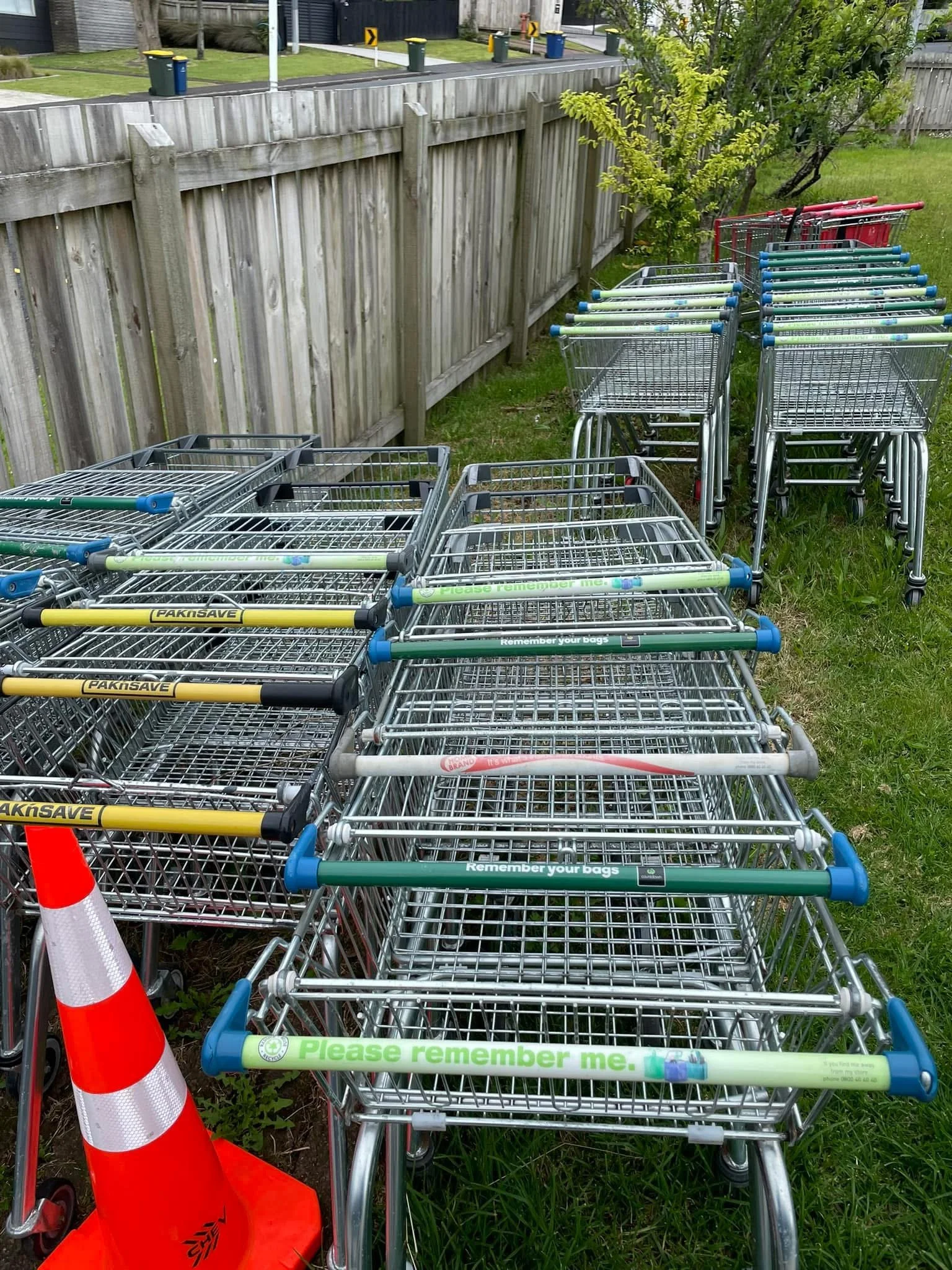
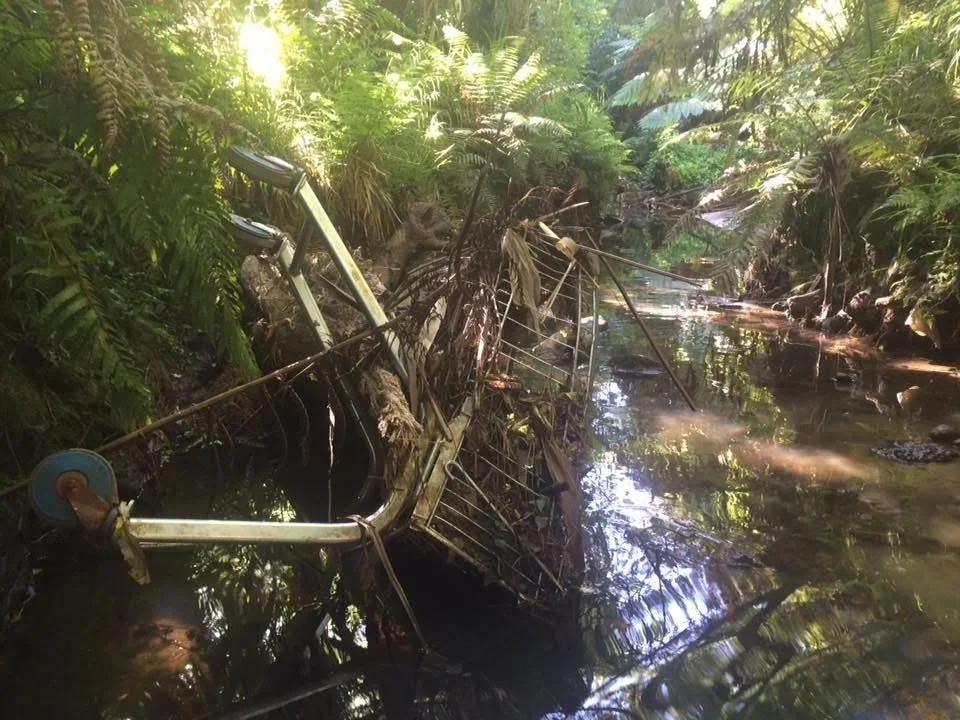
The impacts of this system are also visible in other ways. Abandoned supermarket trolleys have become a common sight in local streets and waterways. In 2022, Ethan and his kids collected more than 30 trolleys in just six weeks, many pulled directly from a nearby stream. Despite efforts to raise the issue, responses from supermarkets and council have been slow. Eventually, the recovered trolleys were returned for a donation, which was then used to purchase fruit trees for the local marae, turning a problem into an opportunity for regeneration.
At the same time, across West Auckland, another kind of absence is being felt. Homes removed after the floods have left behind empty sections, spaces where houses once stood, now sitting idle. For many communities, there is little clarity about what will happen next. Plans feel distant or undefined, with some suggesting it could take years before anything is decided or built. In the meantime, these spaces remain unused. Untended land becomes vulnerable, to neglect, to illegal dumping, to disconnection.
But communities are not short on ideas. People have shared aspirations for these vacant spaces to be activated in the interim, to grow food and replant rescued fruit trees, to create places for gathering, learning, and connection. Spaces that could restore something meaningful while longer term decisions are still being worked through.
Instead, many sit waiting. It is a pattern that keeps repeating, loss followed by waiting, and then eventually rebuilding. Reaction instead of intention. But it does not have to be this way.
Right now, across West Auckland, fruit trees are still being cleared, often without a second thought. Land is being left empty without a clear, shared vision. Opportunities to nourish communities, both socially and physically, are being missed. What if that changed?
Rescuing and relocating fruit trees is one practical, immediate way to respond. It keeps food-producing assets in the community, shortens supply chains, reduces waste, and strengthens connections between people, whenua, and kai. It also supports wellbeing, giving people access to fresh, nourishing food while creating opportunities for sharing, learning, and community connection.
But this cannot rely on neighbours alone acting at the last minute.
We need a proactive, coordinated approach.
Developers, contractors, council and property owners have an opportunity, and a responsibility, to work alongside community groups, local networks to identify and rescue heritage fruit trees before sites are cleared. With early communication, these trees can be carefully relocated to backyards, schools, marae, and community spaces where they can continue to thrive and feed people for generations to come.
Call to action:
If you are a developer, planner, or landowner, connect with local community groups or council before clearing a site.
If you are part of the community, organise, map, and advocate for tree rescue in your neighbourhood.
If you see fruit trees at risk, speak up—because once they are gone, they are gone.
By working together, we can ensure that growth in West Auckland does not come at the cost of our local food systems—but instead becomes an opportunity to strengthen them.