
The Masoe Aiga: A Garden Grown to Be Shared
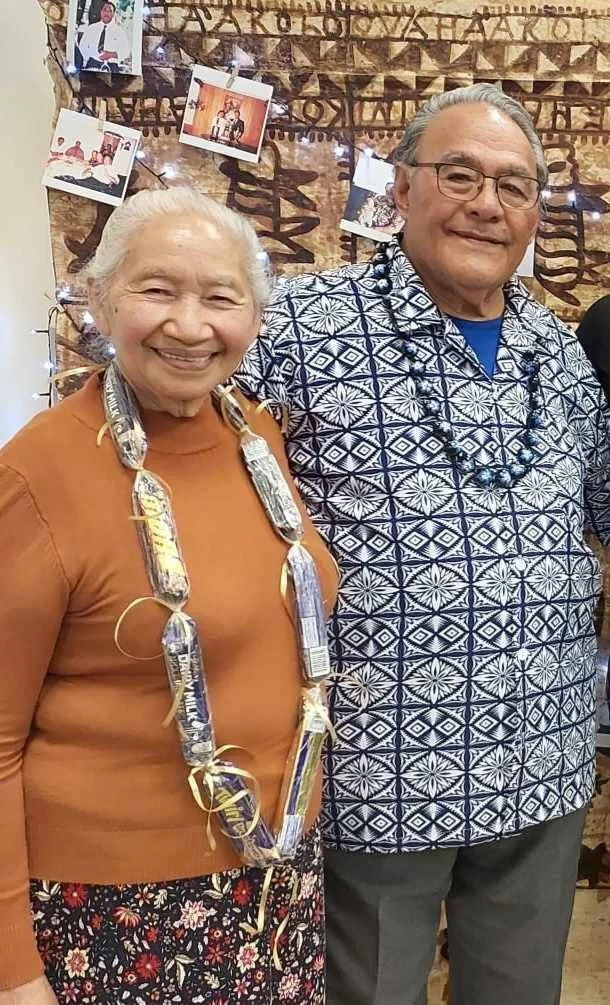
Sina and Ioasa Masoe at his 80th Birthday Celebration in October 2023 at Our City Church in Henderson
Ioasa Masoe (chief title Masoe Masoe) also known as Joe like many migrating people they adopted English names because it was easier to pronounce and Sina, moved the family from Kingsland to Glen Eden in 1970s, and still live in the family home today.
The Masoe children grew up knowing exactly where the fruit was, freely available up and down the neighbourhood. Blackberries along the fence line between the Sumit factory and the bowling club on Glendale Road. A peach tree by the old post office, on the corner of Glendale and West Coast Road. A plum tree between the two churches on the walk to Sunday service. Grapefruit over both neighbours' fences - though the kids weren't so keen on those, tart enough that it took a lot of sugar to make them worth eating. A strawberry patch at the back of Glen Eden Primary. Because the family walked everywhere, that whole stretch of Glen Eden was mapped, tree by tree, in a child's memory of what was in season and where.
Ioasa Masoe (chief title Masoe Masoe) also known as Joe like many migrating people they adopted English names because it was easier to pronounce and Sina, moved the family from Kingsland to Glen Eden in 1970s, and still live in the family home today. Their house was built for family, with Masoe and Sina raising 7 children, cared and supported family who chose to make NZ home helping them enrol in schools and local doctors, find jobs, housing, use public transport, set up bank accounts and navigate health and immigration. Once the family was ready to establish their own roots in community they kept connected to help practically where they could.
The garden grew to match that purpose. In the early years, working multiple jobs left little time for anything elaborate - silver beet, and a few fruit trees: three pears, a peach, a plum. Over the decades it extended further: lettuce, cucumber, cabbages, capsicums, tomatoes, more silver beet, banana trees, and taro leaves planted down toward the stream at the back of the property. Raised beds went in along the side of the house, positioned so they were easy to reach from both kitchens. A second garden went into the front yard - including grapes, grown deliberately along the front fence specifically so they could be shared with anyone who needed them. In 2020, during Covid, they added chickens.
Before the family had a car, everyone went to do the shopping together, simply because it took that many hands to carry it all home. Once the local Woolworths and 3 Guys closed, they started driving to Kelston Foodtown and the Woolworths in New Lynn. For taro and other island produce, they went to Nola's Orchard in Oratia, until it burned down in 2018.
Cooking in the Masoe’ family, has always meant for a crowd. Refrigeration in Samoa in the 1960’s was not a luxury that families had in their fales (Samoan homes), so waste simply wasn't something that happened - what you had, you shared, and big events meant bigger volumes, partly to feed everyone properly and partly as a visible sign of appreciation for the distance people had travelled to attend. That instinct has had to adapt to rising costs over the years - the family's gatherings have moved back toward the staples rather than more elaborate dishes: chop suey, chow mein, raw fish, roast meats, palusami (taro leaves cooked with onion and coconut cream), taro and banana in coconut cream. These days, anyone joining a gathering is simply asked to bring something that works for them. The coming together has always mattered as much as what's on the table - the chance for her parents to tell their stories, to connect with the grandchildren, to be available for advice.
Putting down an umu - the traditional method of cooking with hot stones and steam in the ground - still brings the men of the family together to prep the meat, the taro, the bananas, the palusami, while the women handle everything else. It’s a shared production, each generation learning the process by doing it alongside the last.
As Masoe and Sina have grown older and started attending a Samoan church, their contribution to gatherings has expanded again - dishes reserved specifically for island functions and family occasions: koko rice, suafa'i (banana and tapioca in coconut cream), supo esi (papaya soup), and a fish head soup that only makes an appearance at the events it belongs to.
Story gathered as part of Kai West's exploration of the past, present, and future of kai across West Auckland. Shared as a taonga, with thanks to Gabriel Masoe and whānau.